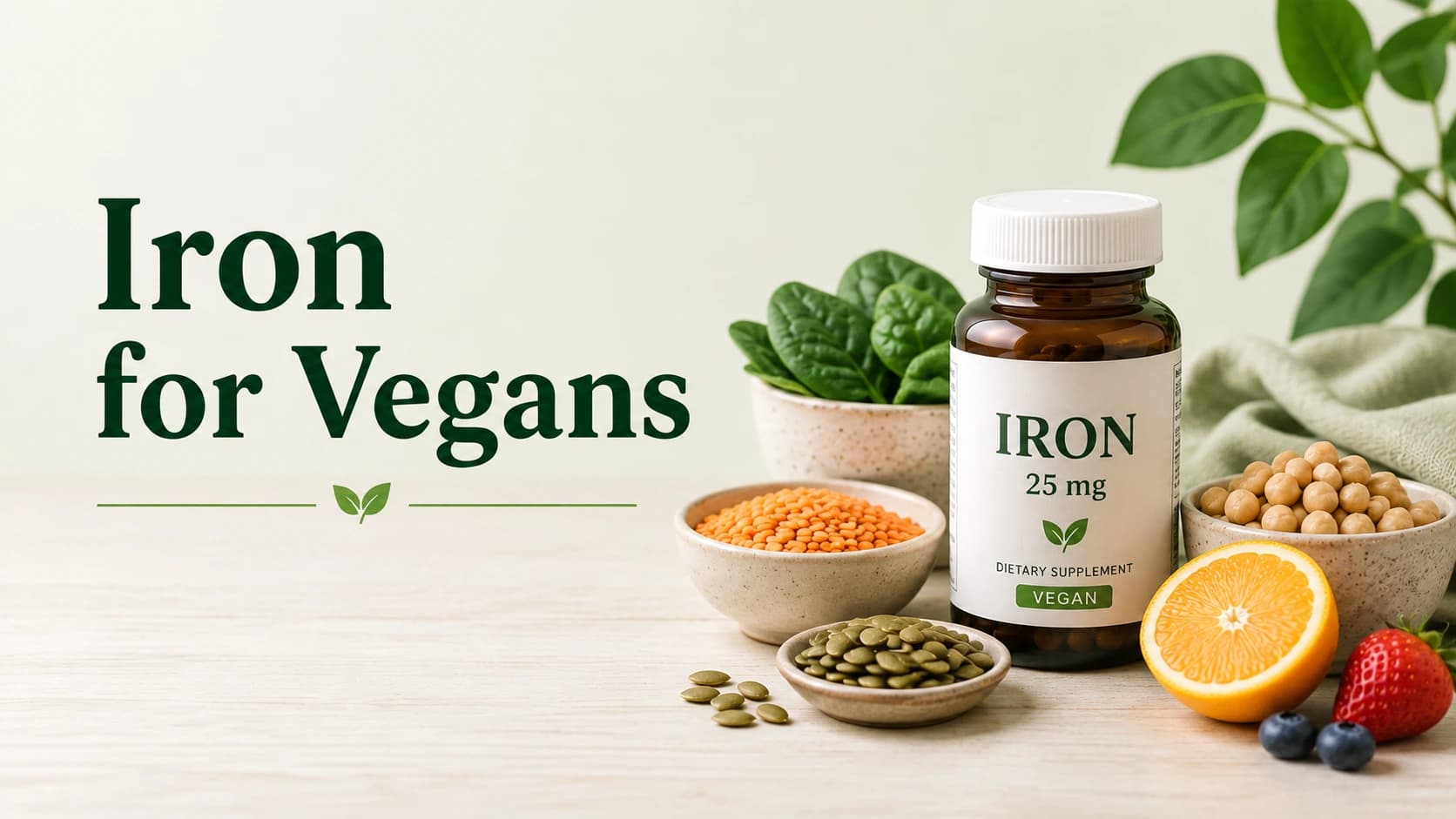
Iron for Vegans: How to Improve Absorption and What to Avoid Taking With It
Iron is an essential mineral that helps your body make hemoglobin, the protein in red blood cells that carries oxygen. For vegans, iron deserves attention because plant foods contain non-heme iron, which is generally absorbed less efficiently than the heme iron found in animal foods.
That does not mean every vegan needs an iron supplement. Many vegan diets can provide enough iron through legumes, tofu, whole grains, nuts, seeds, dark leafy greens, dried fruits, and fortified foods. The important part is understanding how iron absorption works, when supplementation may be useful, and what to avoid taking with iron.
Medical note: Do not start long-term iron supplements unless you have low iron intake, low ferritin, iron deficiency, anemia, or a clinician recommends it. Too much iron can be harmful. If you have fatigue, weakness, heavy periods, pregnancy, digestive disease, or symptoms of anemia, ask a healthcare professional about blood testing.
Quick answer: do vegans need iron supplements?
Vegans do not automatically need iron supplements. A vegan diet can contain plenty of iron, but plant-based iron is affected by absorption factors. The best first step is to eat iron-rich plant foods regularly and combine them with vitamin C-rich foods.
A simple vegan iron strategy:
| Goal | Practical choice |
|---|---|
| Improve iron from meals | Add vitamin C, such as citrus, kiwi, berries, peppers, broccoli, or tomatoes |
| Avoid blocking absorption | Keep tea, coffee, and calcium away from iron-rich meals or iron supplements |
| Check if you need supplements | Ask for blood tests such as ferritin and hemoglobin |
| Take iron supplements safely | Follow clinician advice or product directions |
| Reduce stomach upset | Take iron with a small vitamin C-rich snack if empty stomach causes nausea |
For a broader vegan supplement overview, see Best Supplements for Vegans and Supplements and Vegan Diets: Timing and Deficiency Prevention.
Why iron matters
Iron helps the body make hemoglobin and myoglobin, which support oxygen transport and muscle function. It also contributes to growth, development, cellular function, and hormone production.
When iron levels are too low, the body may not make enough healthy red blood cells. This can lead to iron deficiency or iron-deficiency anemia.
Possible symptoms of low iron may include:
- fatigue
- weakness
- shortness of breath
- dizziness
- headaches
- pale skin
- cold hands and feet
- reduced exercise tolerance
- brittle nails
- restless legs
These symptoms can have many causes, so testing matters. Ferritin is commonly used to assess iron stores, while hemoglobin helps assess anemia.
Heme iron vs non-heme iron
There are two main forms of dietary iron:
| Type | Found in | Absorption |
|---|---|---|
| Heme iron | Animal foods such as meat, fish, and poultry | Generally absorbed more efficiently |
| Non-heme iron | Plant foods, fortified foods, and many supplements | More affected by meal composition |
Vegans get iron from non-heme iron. This is not bad, but it means absorption depends more on what else is eaten at the same time.
Vitamin C can improve non-heme iron absorption. Tea, coffee, calcium, and some compounds in plant foods can reduce absorption when consumed at the same time.
Best vegan iron food sources
Good vegan sources of iron include:
- lentils
- chickpeas
- beans
- tofu
- tempeh
- edamame
- pumpkin seeds
- sesame seeds and tahini
- cashews
- quinoa
- oats
- wholemeal bread
- fortified breakfast cereals
- dark green leafy vegetables
- dried apricots, raisins, prunes, and figs
The NHS lists pulses, wholemeal bread and flour, fortified breakfast cereals, dark green leafy vegetables, nuts, and dried fruits as good vegan iron sources.
A practical meal example:
- lentil stew + tomatoes + bell peppers
- tofu bowl + broccoli + lemon dressing
- chickpea salad + parsley + citrus dressing
- iron-fortified cereal + berries
Best time to take iron supplements
If you need an iron supplement, the usual best time is:
In the morning or between meals, away from coffee, tea, calcium, and high-fiber meals.
Iron is often absorbed better on an empty stomach, but many people experience nausea, stomach pain, or constipation. If iron upsets your stomach, it may be better to take it with a small snack.
Good timing options:
| Situation | Suggested timing |
|---|---|
| Best absorption | Morning, empty stomach, with vitamin C |
| Sensitive stomach | With a small vitamin C-rich snack |
| Coffee drinker | Take iron at a different time from coffee |
| Taking calcium | Separate iron and calcium |
| Taking many supplements | Put iron in its own time slot |
For VitaKeep users, iron is one of the most timing-sensitive supplements. It should not be placed randomly into a supplement stack.
Not sure when to take iron with your other supplements?
Use VitaKeep to check supplement timing and conflicts.
Open the plannerWhat improves iron absorption?
1. Vitamin C
Vitamin C is the most useful pairing for vegan iron. It can help the body absorb non-heme iron from plant foods.
Good vitamin C pairings:
| Iron-rich food | Add vitamin C with |
|---|---|
| Lentils | Tomatoes, lemon juice, peppers |
| Beans | Salsa, lime, cabbage, citrus |
| Tofu | Broccoli, bell pepper, orange |
| Fortified cereal | Strawberries or kiwi |
| Tahini | Lemon juice |
| Spinach or greens | Lemon dressing |
Simple rule:
Pair iron-rich vegan meals with fruits or vegetables high in vitamin C.
2. Food preparation methods
Some plant foods contain phytates, which can reduce mineral absorption. You do not need to avoid these foods, because they are healthy and useful. But preparation can help.
Helpful methods include:
- soaking beans and lentils
- sprouting legumes or grains
- fermenting foods, such as tempeh or sourdough
- cooking certain greens
- choosing fortified foods when needed
These are small improvements, not perfection rules.
What should you avoid taking with iron?
Iron absorption can be reduced by certain foods, drinks, and supplements when taken at the same time.
Avoid taking iron with coffee or tea
Coffee and tea contain compounds that can reduce non-heme iron absorption. This matters especially when drinking them with iron-rich meals or iron supplements.
Practical rule:
Keep coffee and tea away from iron supplements and iron-rich meals when possible.
A simple routine:
- drink coffee later in the morning
- take iron earlier with water and vitamin C
- or take iron in the afternoon away from coffee and tea
Avoid taking iron with calcium
Calcium can interfere with iron absorption, especially when taken as a supplement or in high-calcium fortified foods.
Avoid taking iron at the same time as:
- calcium supplements
- calcium-fortified plant milks
- high-calcium fortified juices
- large calcium-rich meals
Better routine:
- iron in the morning
- calcium with lunch or dinner
Be careful with high-fiber or phytate-heavy meals
Legumes, whole grains, nuts, and seeds are healthy and important in vegan diets, but they contain compounds such as phytates that can reduce mineral absorption. This does not mean you should avoid them. Instead, improve the meal with vitamin C and preparation methods like soaking, sprouting, or fermenting.
Separate iron from some medications
Iron can interact with some medications. If you take thyroid medication, certain antibiotics, antacids, or other regular medication, ask a pharmacist or clinician how to separate them.
Iron and vitamin C: best combinations
Vitamin C is especially useful for vegans because it improves absorption of non-heme iron.
Easy combinations:
| Meal | Better iron absorption upgrade |
|---|---|
| Lentil soup | Add lemon juice or tomatoes |
| Bean chili | Add bell peppers or salsa |
| Tofu bowl | Add broccoli or citrus dressing |
| Oatmeal | Add strawberries or kiwi |
| Hummus toast | Add lemon, parsley, or tomato |
| Fortified cereal | Add berries |
This is one of the easiest nutrition wins for a vegan diet.
Iron and calcium: should you separate them?
Yes, it is usually smart to separate iron and calcium when using supplements.
This matters because many vegans may use calcium-fortified plant milk, calcium supplements, or multivitamins. If you take iron with a calcium-heavy meal or drink, absorption may be lower.
A simple schedule:
| Time | Supplement or meal |
|---|---|
| Morning | Iron + vitamin C |
| Lunch | Normal meal |
| Dinner | Calcium or calcium-rich foods |
You do not need to obsess over tiny amounts of calcium in food. The main issue is taking an iron supplement together with a calcium supplement or a heavily calcium-fortified drink.
Should vegans take iron daily?
Not unless they need it.
Iron is different from vitamin B12. B12 is commonly recommended as a reliable supplement for vegans, but iron should be more personalized.
You may need iron supplementation if:
- blood tests show low ferritin or iron deficiency
- a clinician diagnoses iron-deficiency anemia
- you have heavy menstrual bleeding
- you are pregnant or trying to conceive
- your dietary intake is low
- you have a condition that affects absorption
You may not need an iron supplement if your iron stores are normal and your diet includes iron-rich foods regularly.
Too much iron can cause side effects and may be unsafe for some people, so avoid using high-dose iron casually.
Signs of low iron
Possible signs of low iron include:
- tiredness that does not improve with rest
- weakness
- dizziness
- headaches
- shortness of breath
- rapid heartbeat
- pale skin
- cold hands and feet
- brittle nails
- restless legs
- poor exercise tolerance
These signs are not specific to iron deficiency. If symptoms persist, ask a healthcare professional about blood testing.
Who should be extra careful with iron?
Some people should pay closer attention to iron intake and testing:
- menstruating people, especially with heavy periods
- pregnant people
- people trying to conceive
- endurance athletes
- people with a history of anemia
- people with digestive disorders
- people with restricted diets or low appetite
- frequent blood donors
- teens and young adults during growth
For these groups, testing is more useful than guessing.
Common vegan iron mistakes
1. Assuming all vegans need iron supplements
Vegans need to plan iron intake, but not all vegans need supplemental iron. Food quality, absorption, menstrual status, pregnancy, and blood test results all matter.
2. Taking iron with coffee or tea
This is one of the most common timing mistakes. Keep coffee and tea away from iron-rich meals and iron supplements when possible.
3. Taking iron with calcium
Iron and calcium are better separated, especially in supplement form.
4. Ignoring vitamin C
Adding vitamin C to iron-rich meals is one of the easiest ways to improve absorption.
5. Using high-dose iron without testing
Long-term high-dose iron should not be treated like a casual wellness supplement. Use blood tests and professional guidance.
Simple vegan iron routine
Here is a practical routine if you have been advised to take iron:
Morning
- Take iron with water.
- Add vitamin C, such as orange, kiwi, strawberries, or a vitamin C supplement if appropriate.
- Avoid coffee, tea, and calcium around this time.
Lunch
- Eat an iron-rich vegan meal, such as lentils, beans, tofu, or fortified grains.
- Add vitamin C-rich vegetables or fruit.
Dinner
- Take calcium or zinc here if needed, away from iron.
- Include more iron-rich plant foods if possible.
This routine keeps iron away from its biggest blockers and makes absorption easier.
FAQ
Do vegans need iron supplements?
Not automatically. Vegans should eat iron-rich foods regularly and improve absorption with vitamin C. Supplements are best used when intake is low, blood tests show low iron stores, or a clinician recommends them.
Is vegan iron harder to absorb?
Plant foods contain non-heme iron, which is more affected by meal composition than heme iron from animal foods. Vitamin C improves absorption, while tea, coffee, calcium, and some plant compounds can reduce it.
What is the best time to take iron?
Iron is often best taken in the morning or between meals, away from coffee, tea, calcium, and high-fiber meals. If it upsets your stomach, take it with a small vitamin C-rich snack.
Can I take iron with vitamin C?
Yes. Vitamin C can improve non-heme iron absorption and is a good pairing with iron-rich vegan meals or iron supplements.
Can I take iron with coffee?
It is better not to. Coffee can reduce iron absorption when consumed with iron-rich meals or supplements. Separate them when possible.
Can I take iron with tea?
It is better not to. Tea can reduce non-heme iron absorption. Drink tea outside of iron-rich meals or supplement timing.
Can I take iron with calcium?
It is better to separate iron and calcium, especially if you take calcium supplements or calcium-fortified drinks.
What vegan foods are high in iron?
Good vegan sources include lentils, beans, chickpeas, tofu, tempeh, pumpkin seeds, tahini, cashews, quinoa, oats, fortified cereals, leafy greens, and dried fruits.
What are signs of low iron?
Possible signs include fatigue, weakness, dizziness, shortness of breath, pale skin, rapid heartbeat, brittle nails, and poor exercise tolerance. These symptoms can have many causes, so testing matters.
Should I take iron every day?
Only if you need it or a healthcare professional recommends it. Iron supplementation should be based on diet, symptoms, risk factors, and blood tests.
Conclusion
Iron is important for vegans, but it should be handled differently from vitamin B12. Vegans do not automatically need iron supplements, but they do need to understand how plant-based iron absorption works.
The most useful rules are simple:
- Eat iron-rich plant foods regularly.
- Add vitamin C to iron-rich meals.
- Keep coffee and tea away from iron timing.
- Separate iron from calcium supplements.
- Use blood tests before taking long-term high-dose iron.
- Ask for medical advice if you have symptoms, pregnancy needs, heavy periods, or a history of anemia.
For supplement scheduling, iron is one of the nutrients where timing really matters. A good routine can make a meaningful difference.
Build your supplement routine with VitaKeep.
Build your supplement routine with VitaKeep.
Keep iron, vitamin C, calcium, zinc, and meal timing in one practical daily plan.
Open the plannerSources
- NIH Office of Dietary Supplements — Iron Health Professional Fact Sheet: https://ods.od.nih.gov/factsheets/Iron-HealthProfessional/
- NIH Office of Dietary Supplements — Iron Consumer Fact Sheet: https://ods.od.nih.gov/pdf/factsheets/iron-consumer.pdf
- NHS — The vegan diet: https://www.nhs.uk/live-well/eat-well/how-to-eat-a-balanced-diet/the-vegan-diet/
- British Dietetic Association — Iron: https://www.bda.uk.com/resource/iron-rich-foods-iron-deficiency.html
- British Dietetic Association — Nutritional considerations for dietitians: https://www.bda.uk.com/news-campaigns/campaigns/sustainable-september/nutritional-considerations-for-dietitians.html
- The Vegan Society — Iron: https://www.vegansociety.com/resources/nutrition-and-health/nutrients/iron
- NHS Inform — Vegetarian and vegan diets: https://www.nhsinform.scot/healthy-living/food-and-nutrition/special-diets/vegetarian-and-vegan-diets/
- NCBI Bookshelf — Dietary Iron: https://www.ncbi.nlm.nih.gov/books/NBK540969/